

Sizing is about recovery, not just gallons
Most people replace a forty-gallon tank with a forty-gallon tank because that is what was there. Sometimes that is right. But the number on the label is only half the story, recovery rate, how fast the unit reheats, matters just as much in a household where three people shower in the same hour.
A gas unit recovers considerably faster than an electric one of the same capacity, which is why a fifty-gallon electric tank and a forty-gallon gas tank can serve a household very differently. If you have been running out of hot water for years, the answer may be a different fuel or a larger recovery rate rather than simply more gallons.
The other thing a good installation includes is everything around the tank. New shutoff valves, correctly sized flexible connectors, a thermal expansion tank where the system needs one, a properly routed T&P discharge, and a drain pan where the location warrants it.
Those items are why two quotes for the same tank can differ. We list them, because they are the difference between an installation that lasts and one that produces a call in three years.
At a glance
- Usually same dayStandard sizes stocked; a like-for-like swap is a few hours.
- Sized on recoveryHow fast it reheats, not just how many gallons it holds.
- New valves includedShutoffs, connectors and expansion tank as part of the job.
- Permit where requiredPulled by us, inspected, and the old unit hauled away.
Choosing the right unit
The decisions worth making deliberately rather than by default.
Household demand
Number of people, simultaneous showers, and whether you have a large soaking tub all change the sizing answer.
Gas or electric
Gas recovers faster and costs less to run on most Connecticut rates. Electric is simpler where there is no gas service.
Tank or tankless
Tankless gives endless hot water and takes up no floor space, but needs adequate gas supply and new venting.
Efficiency rating
Higher-efficiency tanks and heat pump water heaters cost more up front and materially less to run.
Space and access
Basement, closet or crawlspace changes what will physically fit and what venting is possible.
Water hardness
Hard Connecticut water shortens tank life. Softening or an anode upgrade is worth discussing at replacement time.
How a replacement goes
Most are a half-day, with hot water back the same evening.
Replace my water heaterAssess and size
Household demand, existing fuel and venting, space and access. If the old unit was undersized we say so rather than repeating the mistake.
Written quote
Unit, valves, connectors, expansion tank, permit, disposal, itemised, so you can compare it properly against anyone else’s.
Installation
Old unit drained and removed, new tank set and connected, new shutoffs and flexes, expansion tank and T&P discharge routed correctly.
Test and hand over
Filled, purged, temperature set safely, recovery verified, gas or electrical connections tested, old unit taken away.
What is included
The line items that separate a proper installation from a tank swap.
Equipment options
- Standard gas and electric tanks
- High-efficiency and power-vent models
- Heat pump water heaters
- Tankless conversion where suitable
- Indirect tanks paired with a boiler
- Capacity and recovery sized to the household
Installation work
- New shutoff valve and flexible connectors
- Thermal expansion tank where required
- T&P relief discharge correctly routed
- Drain pan and drain where the location warrants
- Gas line sizing and leak testing
- Electrical connections and dedicated breaker
Compliance & finish
- Permit pulled and inspection scheduled
- Venting to code on gas and power-vent units
- Seismic and mounting requirements where applicable
- Temperature set to a safe setpoint
- Old unit removed and disposed
- Warranty registered on your behalf
What a new water heater costs
A standard tank replacement is one of the more predictable jobs we quote, and the price depends mainly on capacity, fuel, and whether the installation needs bringing up to current code.
The additions that move it are venting changes on power-vent models, gas line sizing, an expansion tank where none exists, and a drain pan and drain in finished spaces. All of it is itemised so you can see what you are buying.
The $250 installation special applies to qualifying units, financing is available, and high-efficiency heat pump water heaters frequently qualify for Energize Connecticut incentives that we prepare the paperwork for.
What moves the price
- Capacity and fuelGas versus electric, and the recovery rate, are the main equipment variables.
- Efficiency levelStandard, high-efficiency and heat pump water heaters span a wide range.
- Code upgradesExpansion tanks, drain pans and venting corrections are common on older installations.
- AccessA basement is straightforward; an attic or a tight closet adds time and complexity.
Water heater installation questions
What size water heater do I need?
It depends on people and simultaneous demand more than square footage. A forty-gallon gas tank suits many households; larger families or homes with big soaking tubs usually want fifty or more, or faster recovery. We size it on how you actually use hot water.
How long does replacement take?
A like-for-like swap is typically a few hours, and in most cases we can do it the same day. Changing fuel type, adding venting or converting to tankless takes longer.
Should I switch to a heat pump water heater?
They cost considerably less to run and often qualify for Connecticut incentives. They need adequate space and air volume around them, and they cool the room they sit in, which is fine in most basements and not in a small closet.
Do I need a permit?
Yes in most Connecticut municipalities, and we pull it and handle the inspection. It also matters for your insurance if anything ever goes wrong.
What is an expansion tank and do I need one?
It absorbs pressure as water heats and expands. On a closed system, which most modern installations with a backflow preventer are, it is required, and without one you get relief valve discharge and stress on the tank.
Will you take the old one away?
Yes, included in the quote. It leaves with us on the day and is disposed of properly.
On the job
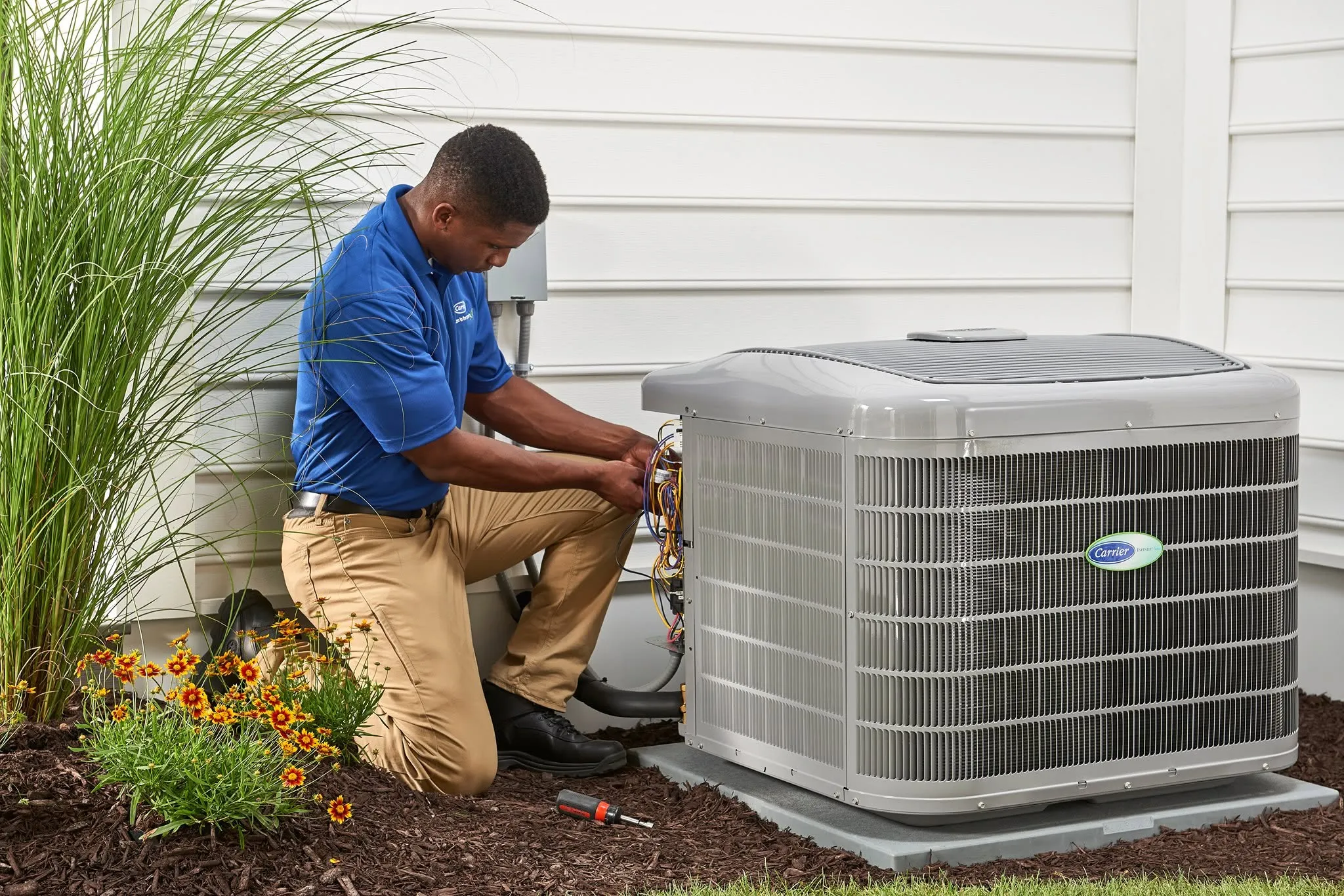
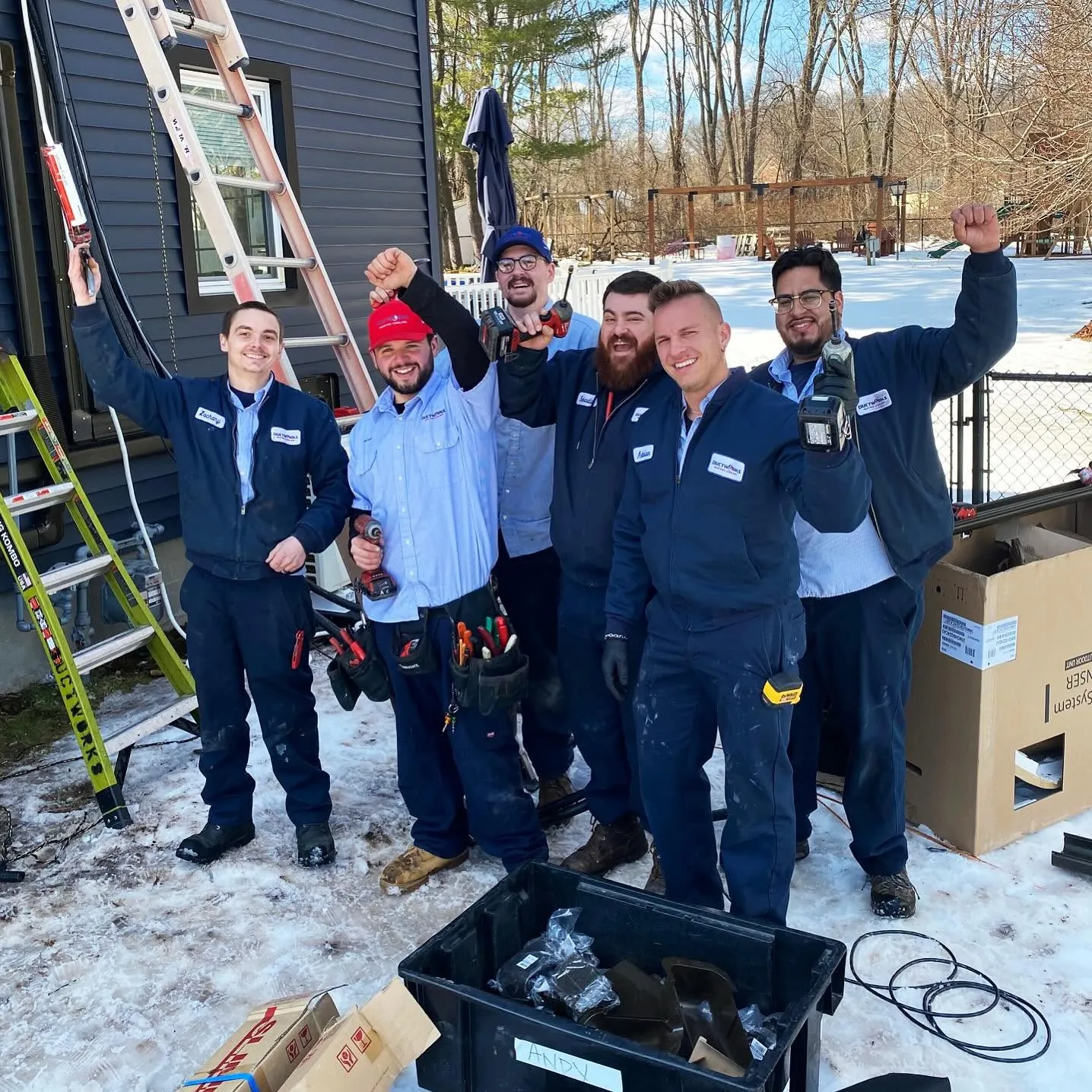
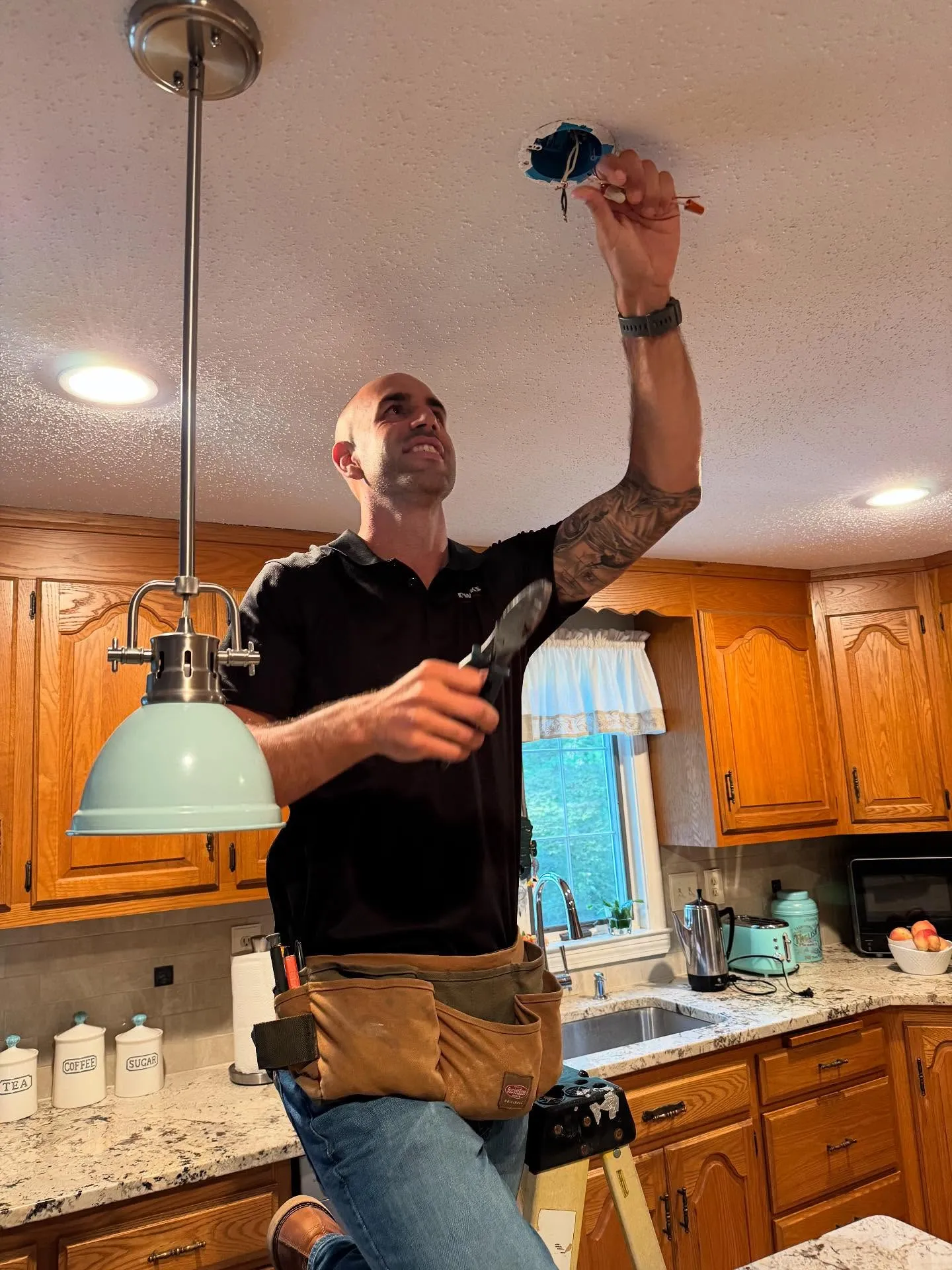
Real crews, real Connecticut houses, no stock photography.
Need help today?
Whether it's an emergency repair or you're planning your next home upgrade, our friendly team is ready to help.
Call 860-245-1986Book plumbing service online
Tell us what’s going on and we’ll call to confirm your appointment window.