

Nor’easters, ice storms, and the week the power did not come back
Anyone who has lived in Central Connecticut through an ice storm knows the pattern. The power goes at nine at night, the roads are impassable by morning, and the estimate for restoration keeps sliding. Meanwhile the heating is off, the sump pump has stopped, and the contents of the freezer are on a clock.
A standby generator is not a portable unit you wheel out and refill in the dark. It is a permanently installed appliance, wired into your electrical system through an automatic transfer switch, running on natural gas or propane. When the utility drops, it starts itself within seconds and carries the house until power returns.
The decision to make up front is scope. A whole-house generator runs everything including air conditioning; a managed or essential-circuits system runs heating, the refrigerator, the sump pump, well pump, and selected outlets and lighting for considerably less money. For most households the second option covers what actually matters.
We install, we do the gas and electrical work in-house, we handle permits and inspection, and we service them afterwards, a generator that has not been exercised and maintained is a very expensive ornament come the storm.
At a glance
- Automatic within secondsTransfer switch detects the outage and starts the generator unattended.
- Natural gas or propaneNo refuelling in the dark, no jerry cans, no carbon monoxide risk from a portable.
- Gas and electrical in-houseOne company for the pad, the gas line, the transfer switch and the permit.
- Serviced annuallyExercise cycles and annual maintenance so it works when it is finally needed.
Deciding what to protect
The scope conversation is where most of the cost lives.
Heating and hot water
The first priority in a Connecticut winter outage. Frozen pipes turn an inconvenience into a claim.
Sump and well pumps
Storms bring water. A basement with no sump pump during a multi-day outage is a predictable disaster.
Refrigeration
Two full appliances of food is a meaningful number, and it is gone somewhere around day two.
Medical equipment
If anyone in the house depends on powered equipment, this stops being about convenience.
Working from home
Internet, office equipment and lighting keep a household functioning through a multi-day event.
Air conditioning
Whole-house coverage including cooling costs more. Worth it for some households, unnecessary for many.
How a generator installation goes
Typically two days on site, plus permitting and utility coordination.
Get a generator quoteLoad assessment and siting
What you want to run, and where the unit can legally and sensibly sit, clearances from windows and property lines matter.
Permits and gas supply
Electrical and gas permits pulled, and the gas supply verified. Natural gas sometimes needs a meter upgrade, which we coordinate.
Installation
Pad set, generator placed, gas line run and pressure tested, transfer switch installed and wired into the panel.
Commission and inspect
Full outage simulation under load, transfer timing verified, inspection completed, and a walkthrough of the exercise schedule and maintenance.
Generator services
Installation, service and repair for standby systems.
Installation
- Whole-house and essential-circuit systems
- Automatic transfer switch installation
- Natural gas and propane connections
- Concrete or composite pad preparation
- Load management modules where appropriate
- Permits, inspection and utility coordination
Sizing & planning
- Load assessment for what you actually need
- Clearance and siting review
- Noise and neighbour considerations
- Gas meter capacity verification
- Panel and sub-panel integration
- Cost comparison across coverage levels
Service & repair
- Annual maintenance and oil changes
- Battery testing and replacement
- Exercise cycle verification
- Transfer switch testing under load
- Fault diagnosis and repair
- Pre-storm-season readiness checks
What a standby generator costs
Generators are a considerable investment and the range is wide. An essential-circuits system covering heating, water, refrigeration and selected outlets costs materially less than a whole-house unit sized to run air conditioning as well.
Beyond the generator itself, the significant variables are the gas supply, the distance from the unit to the panel, the pad, and whether your gas meter can support the additional demand. We verify all of it before quoting.
Financing runs to sixty months on approved credit, which for many households is how a generator becomes a decision made before the storm rather than during the next one.
What moves the price
- Coverage levelEssential circuits versus whole house, including air conditioning, is the largest single factor.
- Fuel supplyNatural gas may need a meter upgrade; propane needs adequate tank capacity and placement.
- Distance to the panelLonger gas and electrical runs add material and labour.
- Site preparationPad work, grading and clearance requirements vary considerably by property.
Generator questions
How quickly does a standby generator start?
Typically within about ten seconds of the transfer switch detecting the outage. You will notice a brief interruption, then the house comes back on its own, nobody needs to be home.
Whole house or essential circuits?
Essential circuits covers heating, water, sump pump, refrigeration and selected outlets and lighting for considerably less. Whole house adds air conditioning and everything else. Most Connecticut households find essential circuits covers what actually matters in an outage.
Natural gas or propane?
Natural gas is simpler where the supply exists, no tank, no refuelling. Propane is the answer where there is no gas service, and needs a tank sized for a multi-day run.
How loud are they?
Modern standby units run around the level of a central air conditioner during operation, plus a weekly exercise cycle lasting a few minutes. Placement matters, and we plan it away from bedroom windows and property lines.
What maintenance do they need?
An annual service, oil, filters, battery, and a load test, plus the weekly self-exercise cycle. A generator that has sat unserviced for five years frequently will not start when it is finally needed.
Do I need permits?
Yes, both electrical and gas, and we handle them. Siting also has clearance requirements from windows, doors and property lines that we verify before installation.
On the job
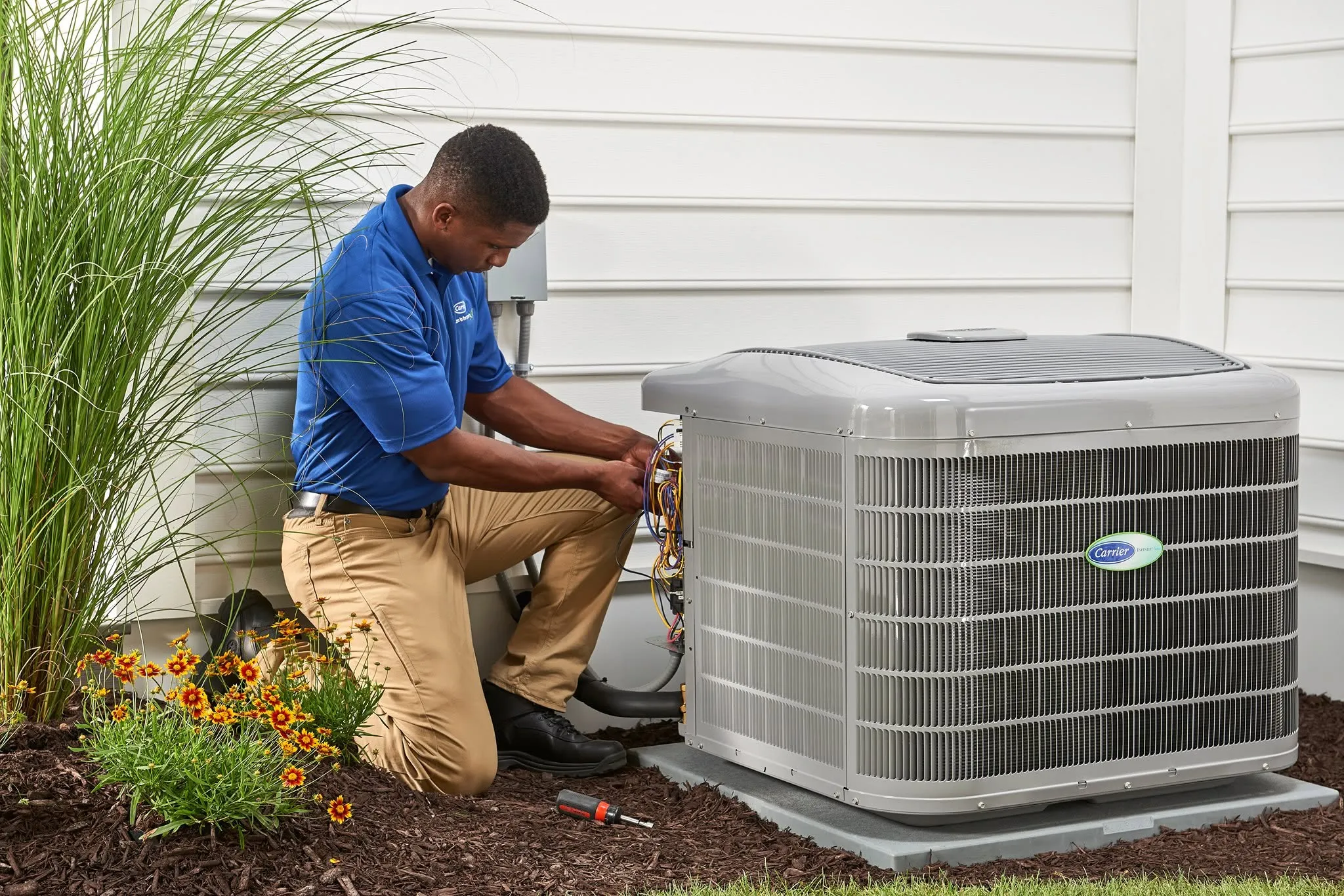
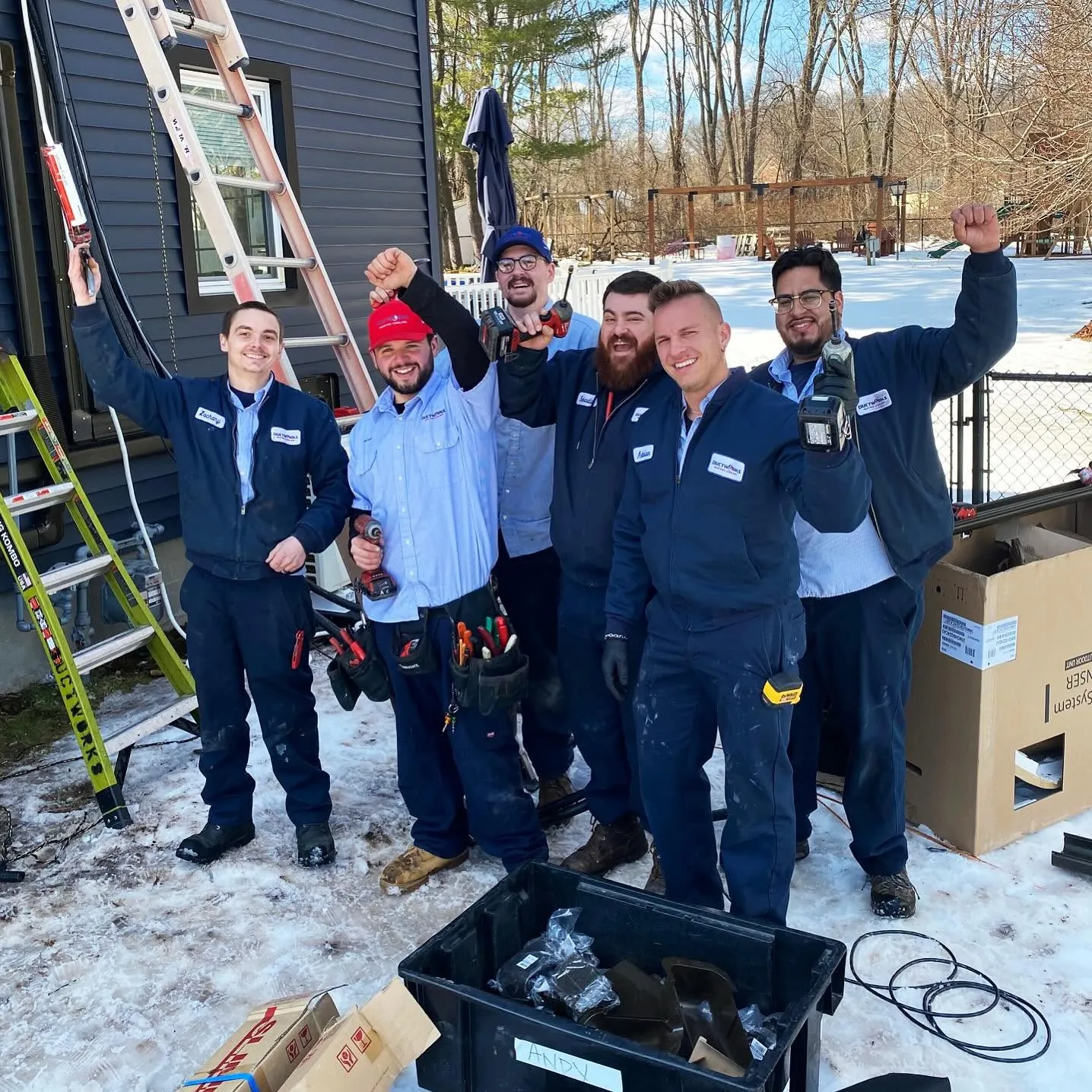
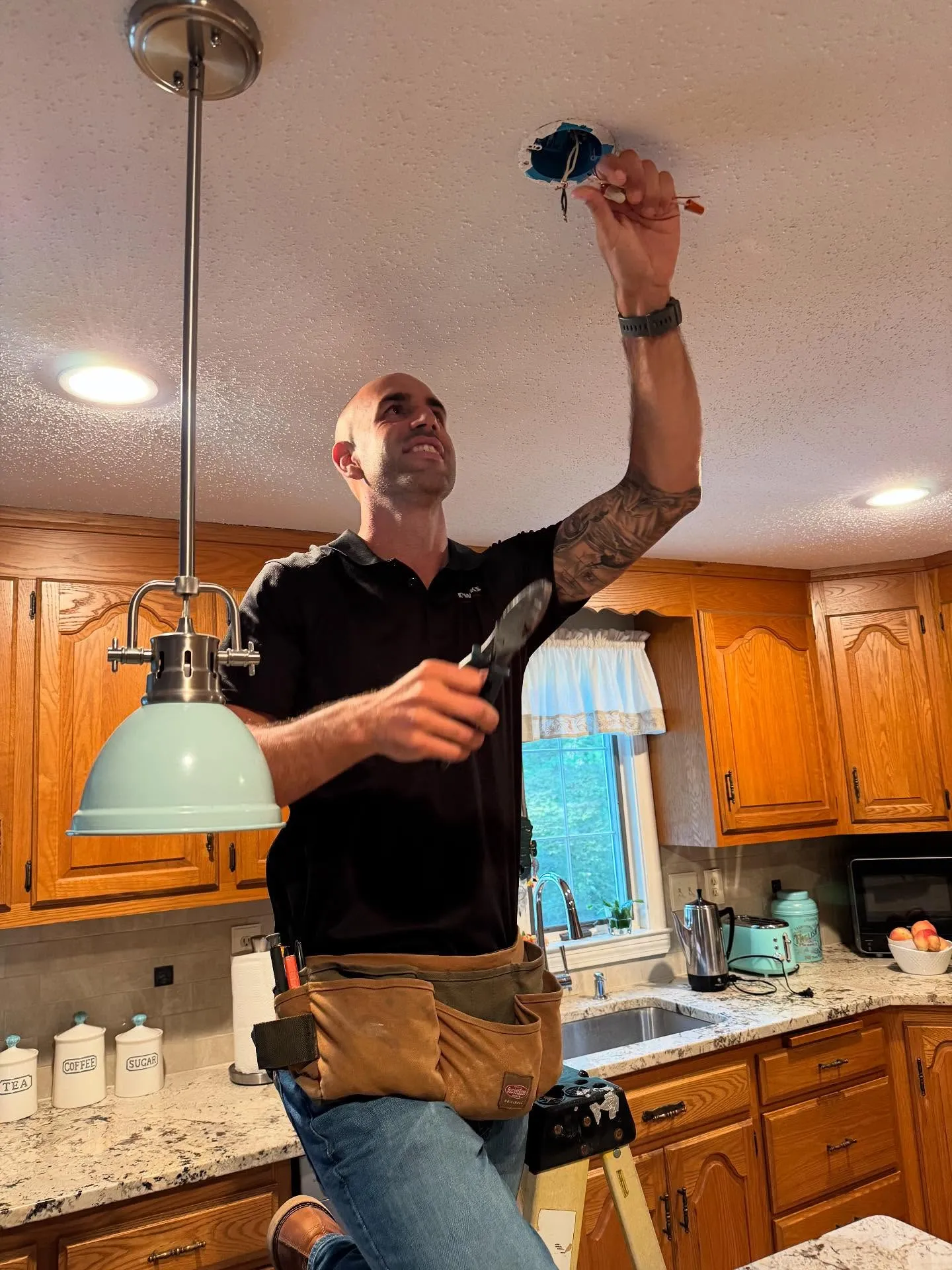
Real crews, real Connecticut houses, no stock photography.
Need help today?
Whether it's an emergency repair or you're planning your next home upgrade, our friendly team is ready to help.
Call 860-245-1986Book electrical service online
Tell us what’s going on and we’ll call to confirm your appointment window.