

A recurring blockage is a symptom, not bad luck
Anyone can push a cable down a drain and get the water moving again. If the same drain blocks again the following spring, nothing was actually solved, the cable punched a hole through the obstruction and left the rest of it in place.
The blockages that recur almost always have a physical cause. Tree roots finding a joint in an older clay or cast iron lateral, a section of pipe that has sagged and holds water, grease that has cooled and coated the inside of a kitchen line, or a genuine break letting soil in.
That is why we camera main lines rather than guessing. Seeing the inside of the pipe tells you whether this was a one-off, whether it needs hydro jetting rather than cabling, or whether the line itself has a problem that will keep producing blockages until it is repaired.
Older Connecticut neighbourhoods with mature trees are root country. If you are on a street lined with maples and your house dates to before the 1970s, roots are the first thing we look for.
At a glance
- Camera inspectionWe look at the inside of main lines rather than guessing at the cause.
- Cabling and hydro jettingThe right tool for the blockage, grease and roots need different approaches.
- Cause identifiedYou get told why it blocked, not just that it is flowing again.
- Flat priceQuoted before we start, including if the camera is needed.
What the symptom tells us
Where the slow drain is says a lot about where the problem is.
Multiple fixtures slow at once
That points at the main line rather than any single fixture. Stop using water heavily until it is looked at.
Gurgling from other drains
Air being displaced past a partial blockage. An early warning worth acting on before it becomes a backup.
Roots in an older lateral
Common in pre-1970s houses on tree-lined streets. Recurring seasonal blockages are the signature.
Kitchen line grease
Grease cools and coats. Cabling punches through it; hydro jetting actually removes it from the pipe wall.
Sewage odour indoors
Either a dry trap or a venting problem. Both are fixable and neither should be ignored.
Backups after heavy rain
Storm water getting into the sanitary line usually means a break or an improper connection somewhere.
How we clear a drain
Clear it, then find out why, then tell you what would prevent a repeat.
Book drain cleaningLocate the blockage
Which fixtures are affected and where the line runs, using the cleanout access rather than pulling toilets unnecessarily.
Clear it
Cabling for solid obstructions and roots, hydro jetting where grease or scale has coated the pipe. The right tool, not just the one on the van.
Camera the line
On main lines and anything recurring, we run a camera to see the actual condition, joints, roots, bellies, breaks.
Report and advise
You see the footage, you get told what caused it, and if there is a structural problem we price the repair separately with no obligation.
Drain services
From a slow bathroom sink to a main line with root intrusion.
Interior drains
- Kitchen sink and disposal lines
- Bathroom sink, tub and shower drains
- Toilet blockages and repeated clogs
- Laundry and utility drains
- Basement floor drains
- Trap and vent troubleshooting
Main lines
- Main sewer line cabling
- Hydro jetting for grease and scale
- Root intrusion clearing
- Camera inspection with footage
- Cleanout location and installation
- Municipal versus private responsibility identified
Prevention & repair
- Recurring blockage root-cause analysis
- Line repair and spot replacement quotes
- Backwater valve recommendations
- Grease and disposal habits advice
- Enzyme treatment guidance
- Scheduled maintenance for known problem lines
What drain cleaning costs
Straightforward fixture drains are a flat, modest price. Main line clearing costs more because it takes bigger equipment and more time, and hydro jetting is priced above cabling because it does considerably more.
Camera inspection is worth paying for on any recurring blockage. It is the difference between clearing the same line every spring and finding out that a root mass at one joint is causing all of it.
If the camera shows a structural problem, a break, a collapsed section, a significant belly, we price the repair separately and you are under no obligation to do it with us. We will also tell you honestly if it sits on the municipal side of the connection.
What moves the price
- Fixture drain or main lineDifferent equipment, different time, meaningfully different price.
- Cabling or hydro jettingJetting costs more and is the correct answer for grease and scale.
- Cleanout accessNo accessible cleanout means more work to reach the line, and often a recommendation to install one.
- Camera inspectionAdded where the cause matters, which on any recurring blockage it does.
Drain cleaning questions
Are chemical drain cleaners a bad idea?
Mostly, yes. They rarely clear a real blockage, they damage older pipes with repeated use, and they make the job hazardous for whoever opens the line afterwards. A plunger and a call are the better sequence.
Why does the same drain keep blocking?
The cause was never removed. Cabling can punch through a blockage without clearing the pipe wall, and roots or a sagging section will refill it. A camera inspection is how you find out which it is.
What is hydro jetting?
High-pressure water that scours the inside of the pipe rather than boring a hole through the obstruction. It is the correct tool for grease, scale and heavy root debris, and it leaves the line genuinely clean.
Can tree roots really break a sewer line?
They do not usually break it, they find an existing joint or crack, get in where the moisture is, and then grow. Older clay and cast iron laterals in tree-lined Connecticut neighbourhoods are the classic case.
All my drains are slow at once. What does that mean?
A main line problem rather than a fixture problem. Ease off on water use in the house and call promptly, because the next stage is usually a backup at the lowest fixture.
Is the sewer line my responsibility or the town’s?
Generally the lateral from your house to the main is yours, and the main in the street is the town’s. Where exactly the boundary sits varies by municipality, and a camera inspection helps establish which side the problem is on.
On the job
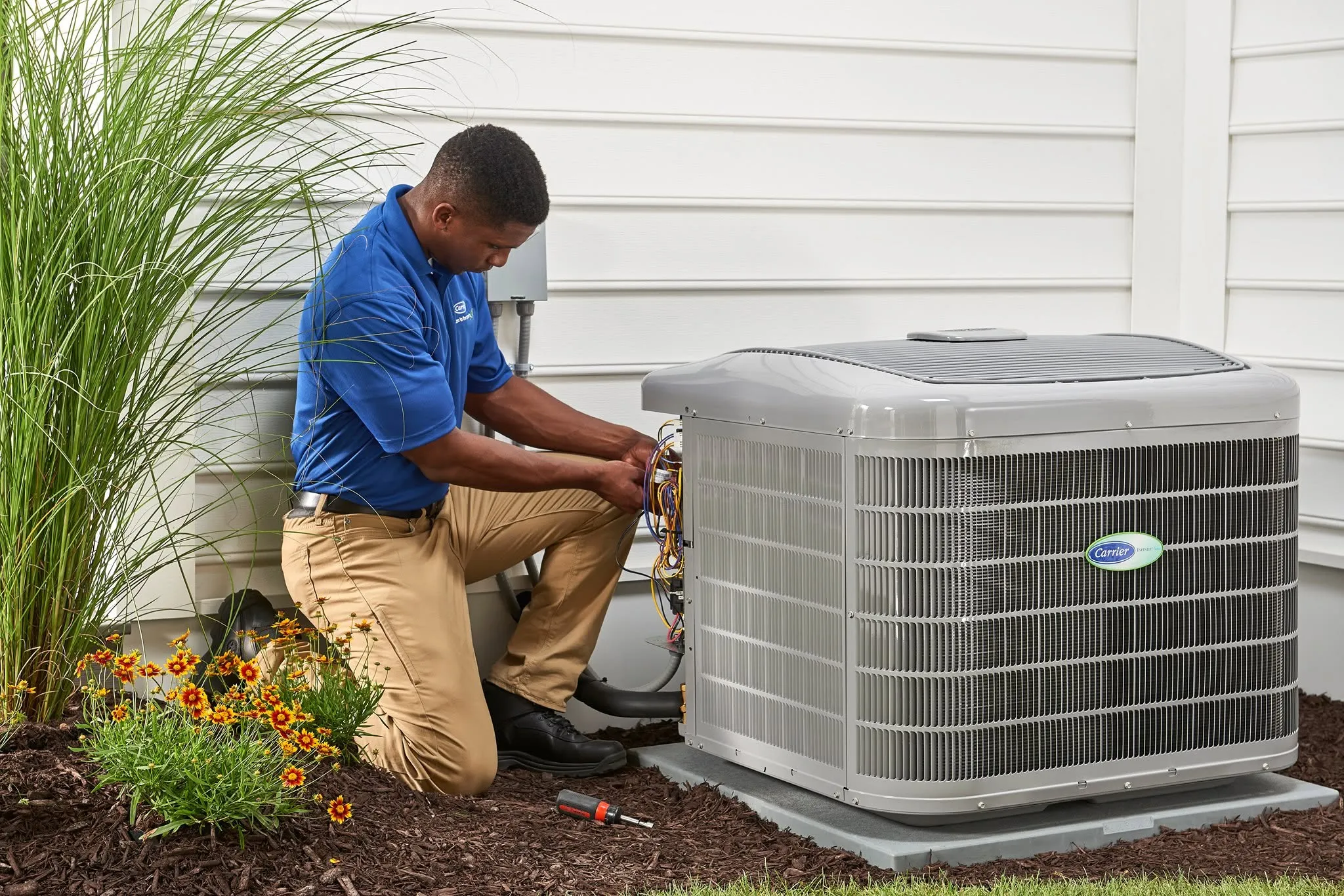
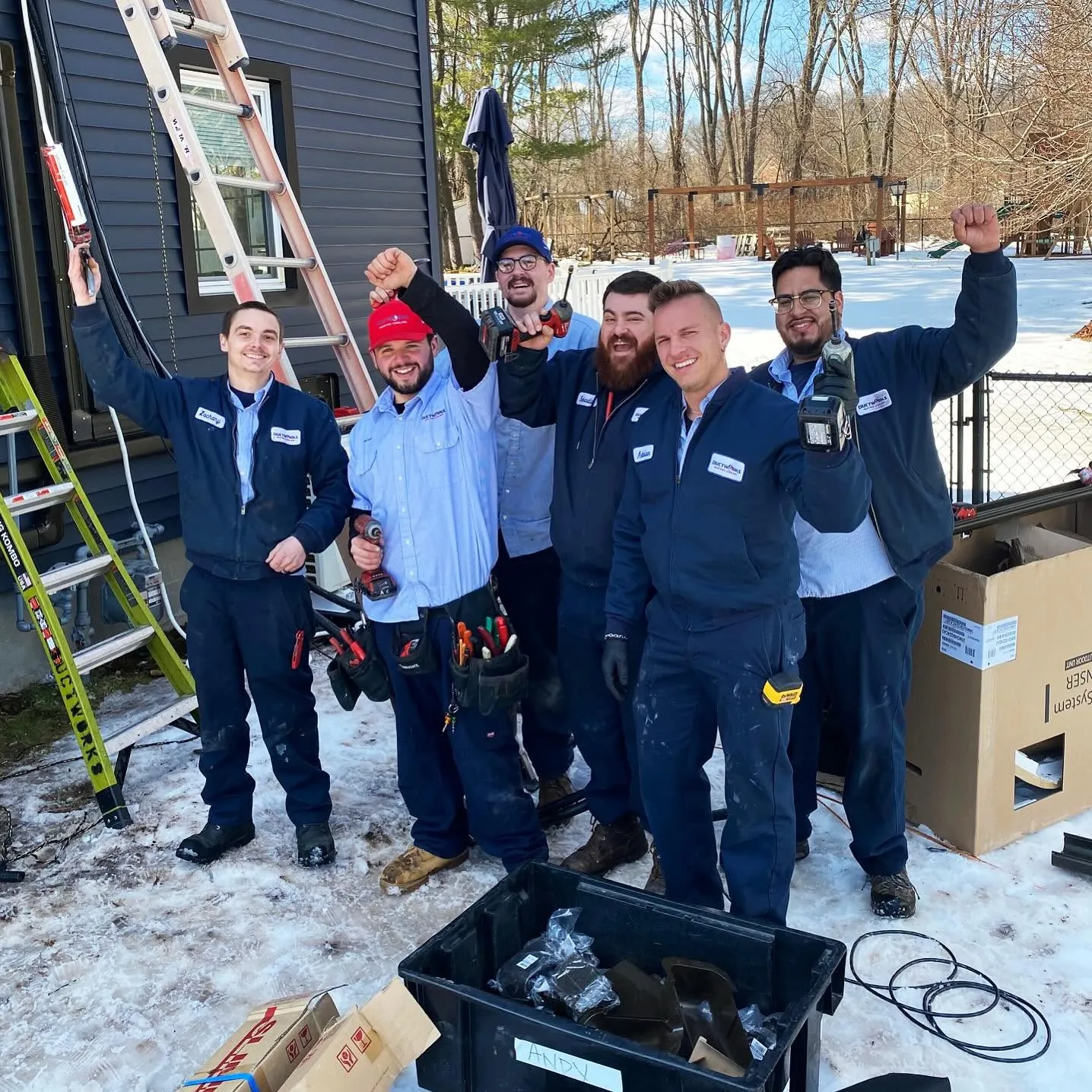
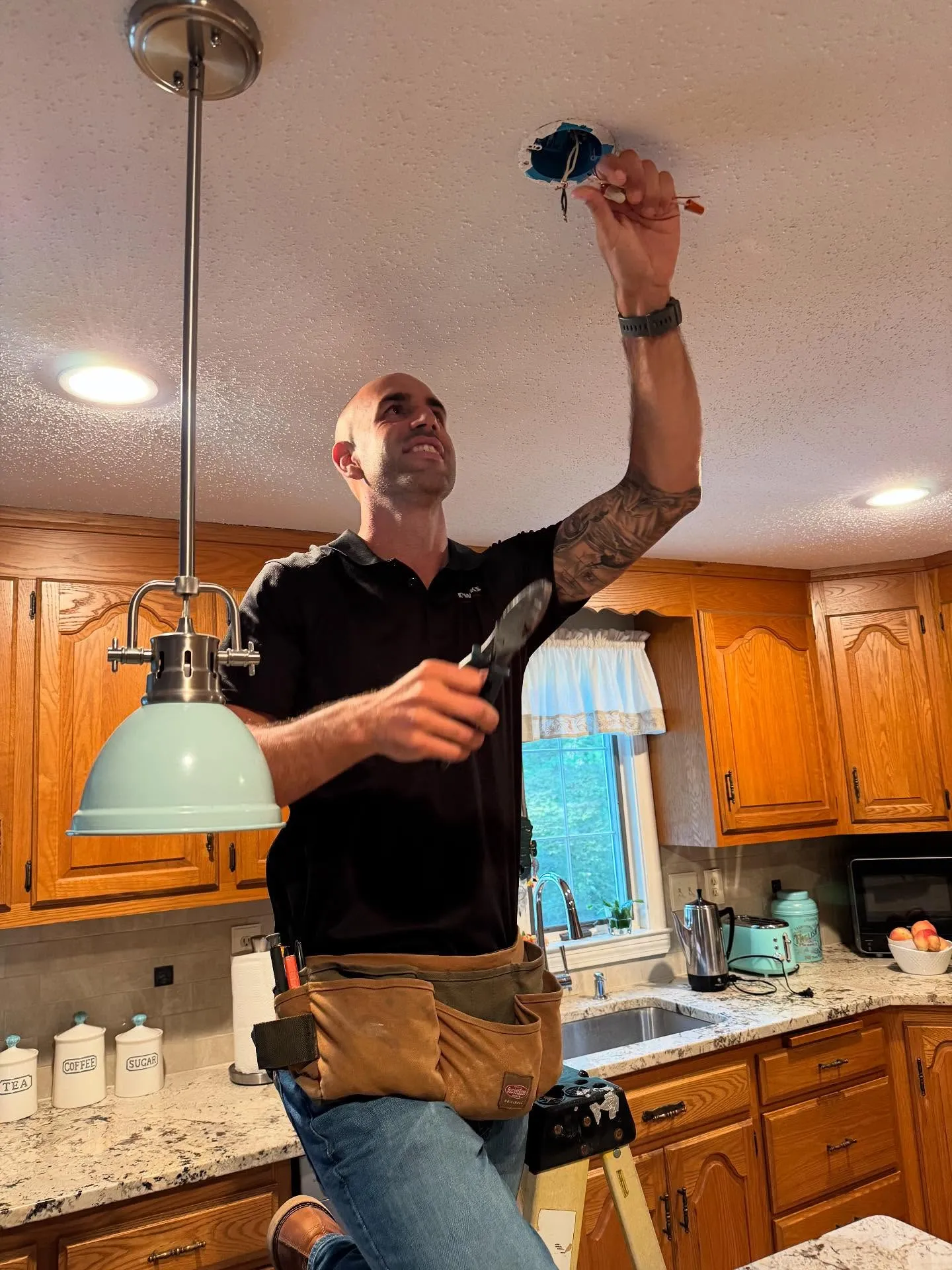
Real crews, real Connecticut houses, no stock photography.
Need help today?
Whether it's an emergency repair or you're planning your next home upgrade, our friendly team is ready to help.
Call 860-245-1986Book plumbing service online
Tell us what’s going on and we’ll call to confirm your appointment window.