

Modern houses are full of circuit boards
Thirty years ago a surge took out a television. Today virtually every significant appliance in a house has a control board in it, the furnace, the heat pump, the range, the washer, the well pump, the EV charger, the garage door opener. All of them are sensitive to voltage spikes, and all of them are expensive to replace.
Most people picture surges as lightning strikes. Direct strikes do happen, particularly in Connecticut summer storms, but the majority of surge damage is cumulative: smaller spikes from utility switching, transformer operations, and large motors on your own property cycling on and off. Each one degrades sensitive electronics slightly, and the failure arrives months later looking like ordinary bad luck.
Whole-home protection is a device installed at the panel that clamps voltage before it reaches your branch circuits. It is a modest cost against what it protects, and it takes an electrician a short visit to install.
Layered protection is the correct approach: a panel-level device for the whole house, plus point-of-use protection at your most sensitive electronics. One does not replace the other.
At a glance
- Installed at the panelProtects every circuit in the house, not just what is plugged into a strip.
- A short visitStraightforward installation for a licensed electrician in most panels.
- Layered with point-of-usePanel device plus strips at sensitive electronics is the right approach.
- Manufacturer warrantiesMany devices carry connected-equipment warranties; we explain the terms.
What it protects, and why it matters here
The appliances that get expensive when a spike gets through.
Heating and cooling boards
A furnace or heat pump control board is one of the pricier things in the house to replace, and it is entirely electronic.
Connecticut storm season
Summer thunderstorms and winter nor’easters both bring utility switching events and outage-restoration spikes.
EV chargers
A significant piece of electronics on a dedicated high-current circuit, and not cheap.
Well and sump pumps
Motor controls that fail quietly and are discovered at the worst possible moment.
Modern appliances
Induction ranges, smart refrigerators and front-load washers are all board-driven now.
Networking and smart home
Routers, hubs, cameras and thermostats, individually modest, collectively substantial.
How installation works
One visit, and it protects everything downstream from then on.
Add surge protectionCheck the panel
Available space, bus condition and grounding quality. A surge device relies on a good ground to do its job.
Recommend the right device
Sized to your service, with the surge rating and warranty terms explained rather than glossed over.
Install and bond
Mounted at or in the panel, wired on a short lead, and properly bonded, long leads reduce effectiveness significantly.
Verify and advise
Indicator status confirmed, and a walkthrough of where point-of-use protection still makes sense in your house.
Surge protection services
Panel-level and point-of-use, plus the grounding that makes both work.
Whole-home devices
- Type 2 panel-mounted surge protective devices
- Sizing appropriate to your service
- Installation in existing or new panels
- Short-lead mounting for maximum effectiveness
- Status indicator explained and located visibly
- Connected-equipment warranty registration
Grounding & bonding
- Ground electrode system inspection
- Bonding corrections to current code
- Water and gas pipe bonding verification
- Sub-panel grounding review
- Older-home grounding upgrades
- Testing after installation
Point-of-use
- Protection at sensitive electronics
- Dedicated circuits for critical equipment
- HVAC equipment surge protection
- Coordination with panel-level devices
- Advice on what genuinely needs it
- Replacement of degraded protectors
What surge protection costs
Whole-home surge protection is one of the least expensive meaningful upgrades in a modern house. The device and its installation together cost a fraction of a single furnace control board.
The main variable is your panel. Space, condition and existing grounding all matter, a panel with poor grounding needs that corrected first, because a surge device is only as good as the path it dumps to.
It is also worth doing at the same time as other panel work. If you are upgrading the service, adding an EV charger or installing a generator, the electrician is already at the panel and the marginal cost is small.
What moves the price
- Device ratingHigher surge ratings and longer warranties cost more.
- Panel space and conditionA full or obsolete panel may need work before a device can be fitted correctly.
- Grounding correctionsOlder houses sometimes need grounding brought up to code first.
- Bundled workMaterially cheaper when done alongside a panel upgrade, EV charger or generator install.
Surge protection questions
Is a power strip not enough?
A point-of-use strip protects only what is plugged into it. It does nothing for hardwired equipment, the furnace, the heat pump, the range, the well pump, which is where the expensive damage happens.
Does surge protection stop lightning damage?
It substantially reduces damage from nearby strikes and induced surges. A direct strike on the house is beyond what any device can fully absorb, but that is a rare event compared with the constant smaller surges these devices handle every month.
How long does a surge protector last?
They degrade as they absorb energy. Most have an indicator light showing they are still functional, and typical service life is several years depending on how much activity your area sees. We show you where to check.
Do I still need point-of-use protection?
Yes, for sensitive electronics. Layered protection is the correct approach, the panel device handles the large events, and local protection handles what gets past it.
Will it work with my existing panel?
Usually. It needs available space and sound grounding. If your panel is full or the grounding is not to current code, we address that first and tell you before quoting.
Is it worth it?
A single furnace or heat pump control board costs several times what whole-home protection does, and most houses now have a dozen board-driven appliances. It is one of the easier value arguments we make.
On the job
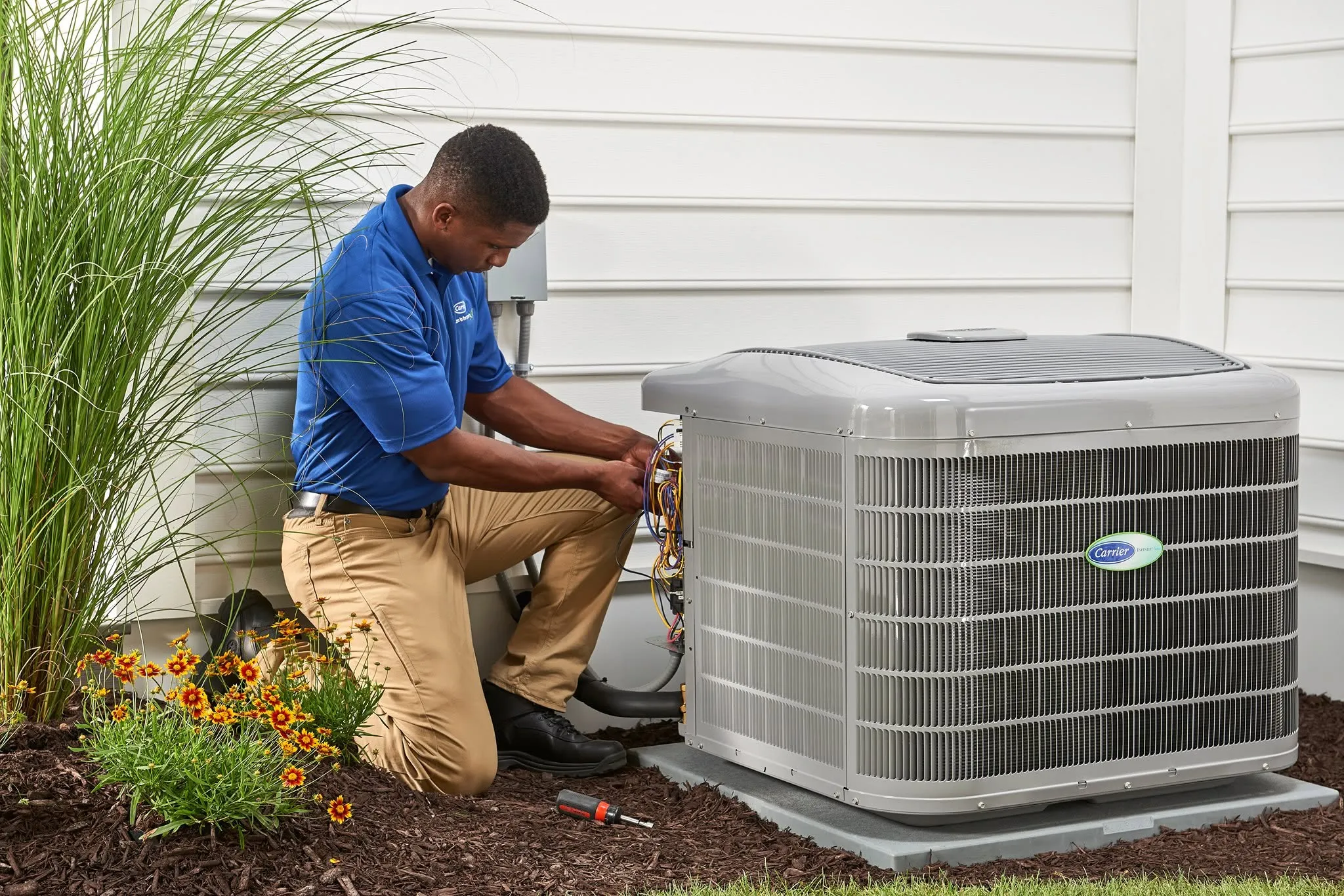
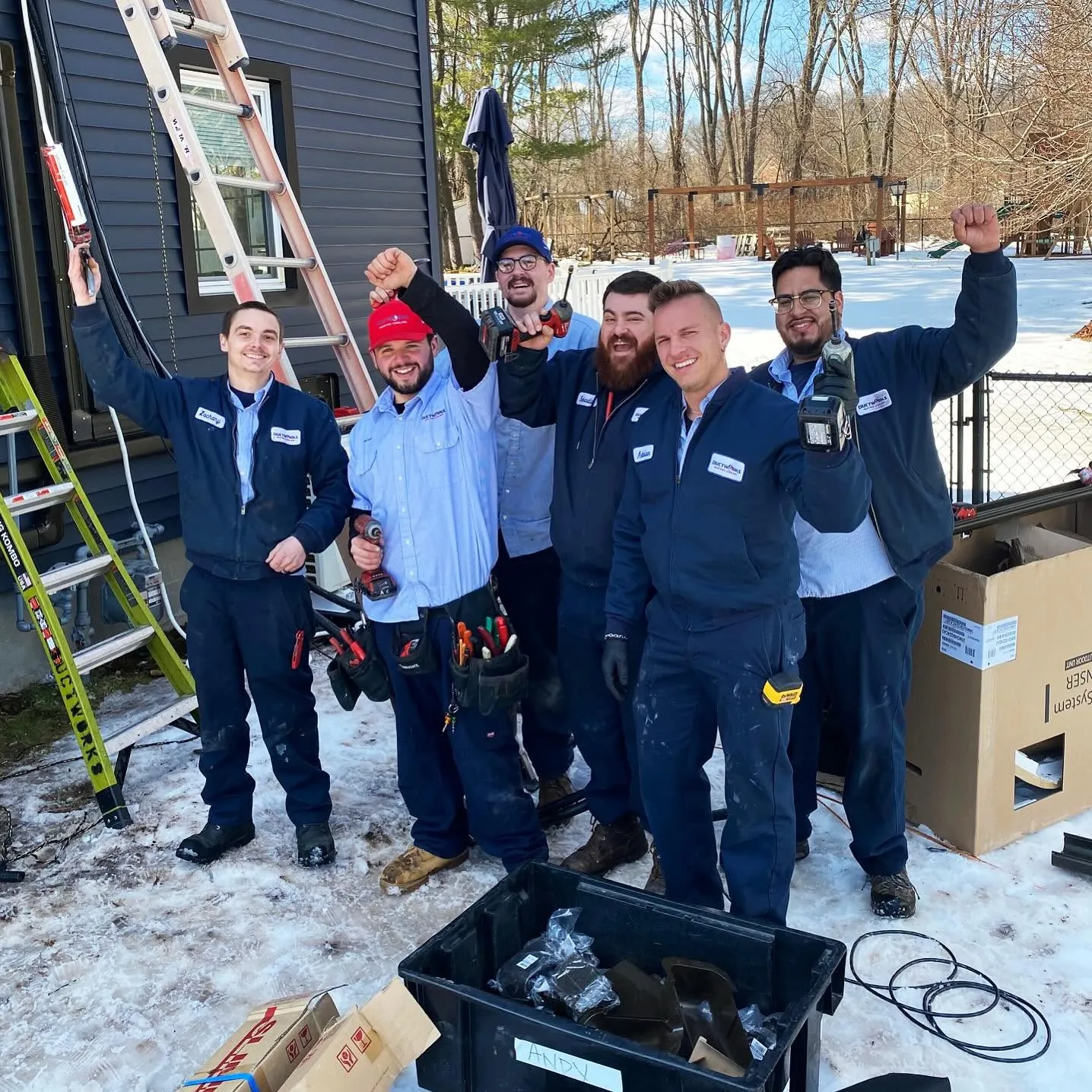
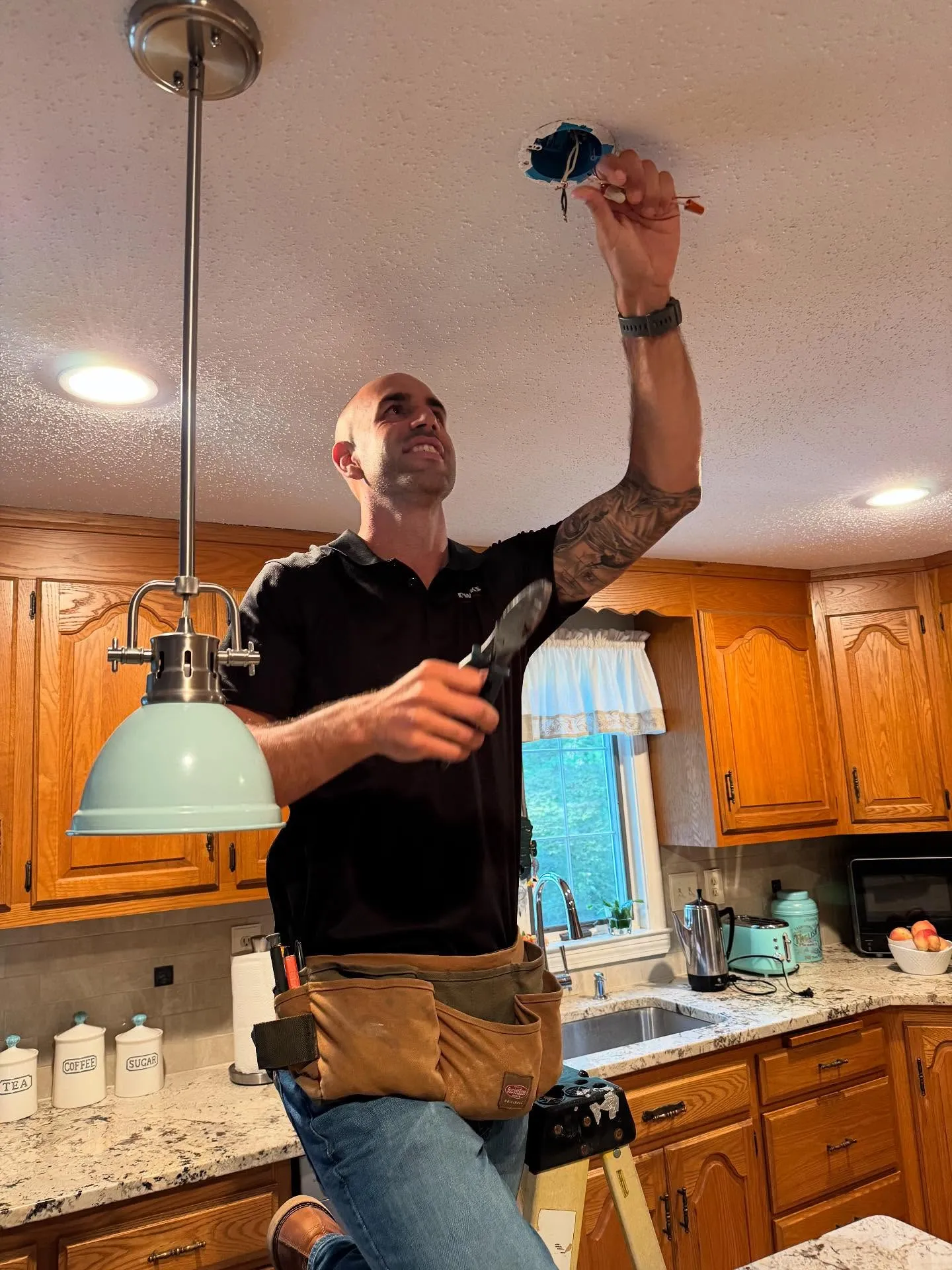
Real crews, real Connecticut houses, no stock photography.
Need help today?
Whether it's an emergency repair or you're planning your next home upgrade, our friendly team is ready to help.
Call 860-245-1986Book electrical service online
Tell us what’s going on and we’ll call to confirm your appointment window.