

When 100 amps stops being enough
A house built in the 1960s was wired for a fridge, a television and some lamps. It was not wired for a heat pump, an EV charger, an induction range, a hot tub and a home office at the same time. That is the real driver behind most panel upgrades we do, not a fault, but a house whose electrical demand has quietly outgrown its service.
The other driver is the panel itself. Certain brands from the 1950s through the 1980s have documented failure histories where breakers do not reliably trip under fault conditions. If you have one, you may already have found that insurers ask about it. We will identify what you have and be straight about whether it needs replacing or simply monitoring.
A panel upgrade is not a small job and we do not pretend otherwise. It means coordinating with the utility, pulling a permit, a day without power, and an inspection. Anyone offering to do it quickly and quietly is skipping something important.
The upside is that it opens up everything else. EV charging, heat pumps, a generator interlock, additional circuits, without every future project starting with a conversation about capacity.
At a glance
- 100A to 200A serviceThe most common upgrade, and what most modern houses need.
- Honest assessmentWe tell you if your existing panel is fine. Plenty are.
- Permit and inspectionWe coordinate the utility, pull the permit and meet the inspector.
- Usually one dayPower off in the morning, back on the same evening in most cases.
Signs your panel needs attention
Some are safety, some are capacity, and they are different conversations.
A panel with a known history
Certain older brands do not reliably trip under fault. If yours is one, it is worth knowing and worth planning for.
Fuses rather than breakers
A fuse box means the service is likely 60 amps and decades old. Insurers increasingly ask, and capacity will be a constant limit.
No space left
A full panel means every new circuit needs a tandem breaker or is simply not possible. That blocks EV charging and heat pumps.
Frequent trips across circuits
Not one bad circuit but a service genuinely at its limit under normal household load.
Planning an EV or heat pump
Both add substantial continuous load. Worth checking capacity before you buy the car, not after.
Heat, buzzing or scorch marks
Any of these at the panel is urgent. Call rather than opening it yourself.
Assess the real need
Load calculation on your actual and planned usage. Sometimes the answer is a sub-panel or a couple of circuits rather than a full service upgrade.
Permit and utility coordination
We pull the permit and arrange the utility disconnect and reconnect. You get a date, not a vague window.
Installation day
Power off, old panel removed, new panel and service equipment installed, every circuit relabelled properly, grounding and bonding brought to current code.
Inspection and close-out
We meet the inspector, the permit closes, and you get a panel schedule that actually tells you what each breaker does.
Panel services
From a single breaker to a full service upgrade with new grounding.
Upgrades
- 100A to 200A service upgrades
- Fuse box to breaker panel conversion
- Obsolete and recalled panel replacement
- Sub-panels for garages, additions and workshops
- Load calculations for EV and heat pump additions
- Meter socket and service entrance work
Safety & code
- Grounding and bonding brought to code
- AFCI and GFCI breaker installation
- Correct breaker sizing and double-tap correction
- Panel schedule labelled circuit by circuit
- Thermal inspection of connections
- Generator interlock or transfer switch provision
Repairs
- Individual breaker replacement
- Bus bar and connection repair
- Panel relocation where required
- Weather-tight exterior enclosures
- Emergency assessment of hot or arcing panels
- Insurance and real estate inspection support
What a panel upgrade costs
A service upgrade from 100 to 200 amps is one of the larger residential electrical jobs, and the price depends heavily on what the utility side requires and where the panel and meter are located.
Straight panel replacements at the same service size cost less. Adding a sub-panel for a specific project, a garage, a workshop, an EV charger, is cheaper again and is sometimes the right answer instead of a full upgrade.
We quote in writing after seeing the service, and the number includes the permit, the inspection and the utility coordination. Financing applies, and if the upgrade is being driven by a heat pump or EV charger installation, it may fall under a Connecticut incentive program.
What moves the price
- Service size and utility workWhat the utility requires on their side varies by location and existing service.
- Panel and meter locationAn interior panel far from the service entrance is more work than one on an exterior wall.
- Existing groundingOlder houses frequently need grounding electrodes brought to current code.
- Circuit count and conditionMore circuits, and older wiring needing correction, both add time.
Electrical panel questions
Do I need a 200-amp service?
If you are adding an EV charger, a heat pump, an induction range or a hot tub, probably. If your usage is not changing and the panel is sound with space available, 100 amps may be perfectly adequate. We run the load calculation rather than assuming.
How long does a panel upgrade take?
Most are a single day, with power off for a good part of it. Jobs requiring meter relocation or significant utility work can run longer, and we tell you that up front.
Will I be without power?
Yes, for most of the day during the changeover. We schedule it so it is one predictable day rather than an open-ended outage, and we can discuss timing if you work from home.
Is my old panel actually dangerous?
Some brands genuinely have documented failure histories; many older panels are simply full or outdated rather than unsafe. We identify what you have and tell you honestly which category it is in.
Do you handle the permit and inspection?
Always. Panel work requires a permit, and we pull it, coordinate with the utility, and meet the inspector ourselves.
Can I add an EV charger without upgrading the panel?
Sometimes, it depends on your existing load and available capacity. A load calculation answers it definitively, and it is a much cheaper question to ask before the car arrives.
On the job
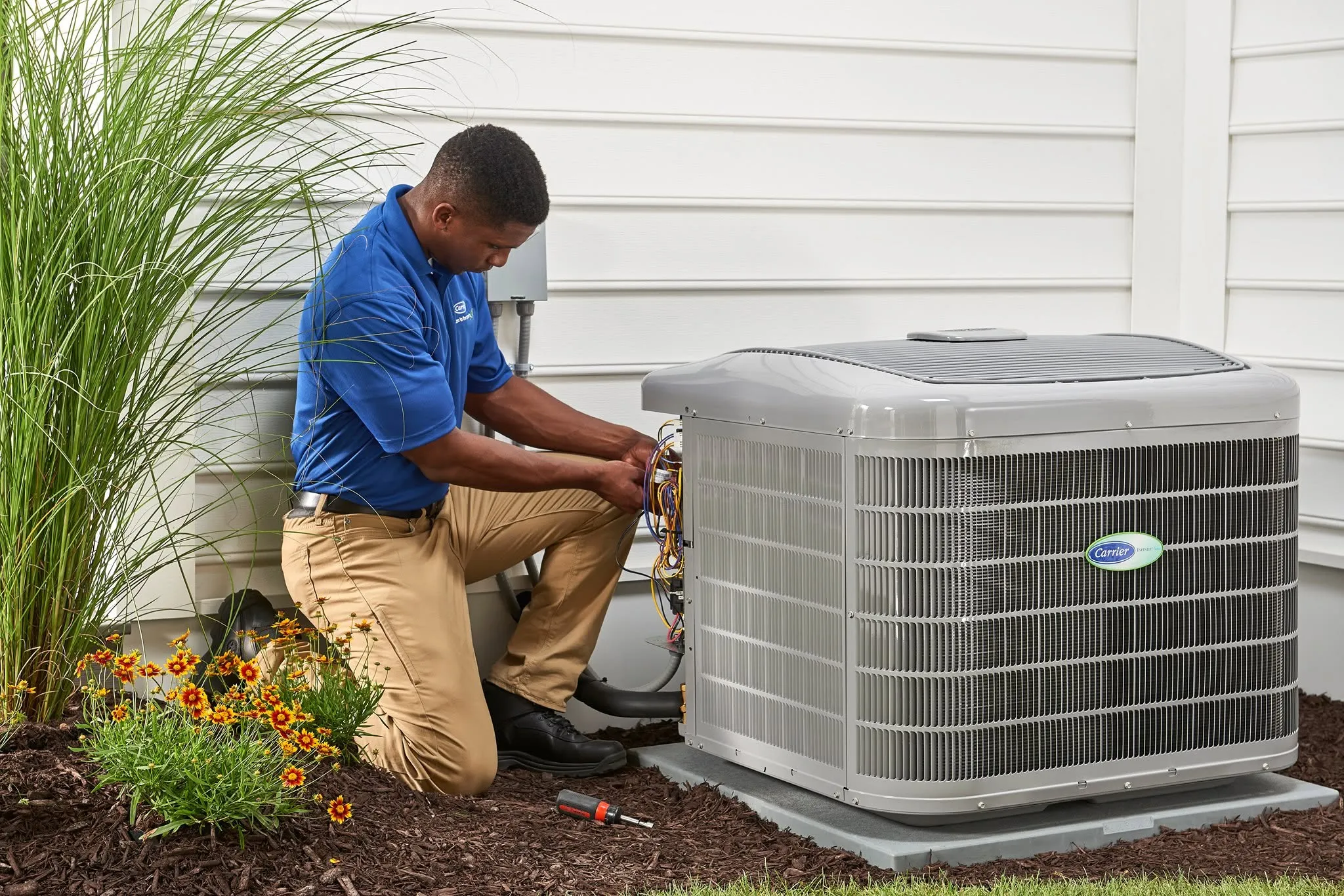
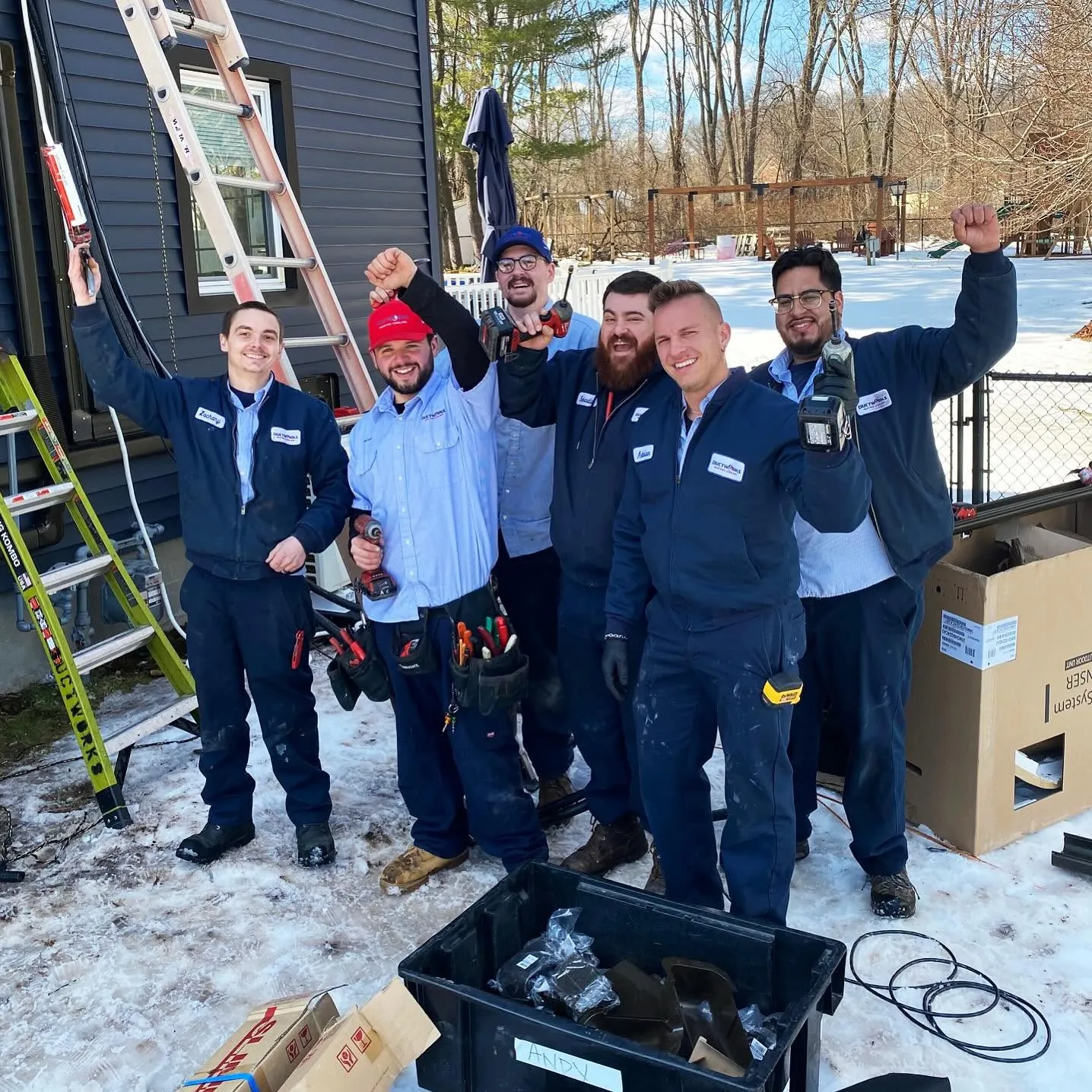
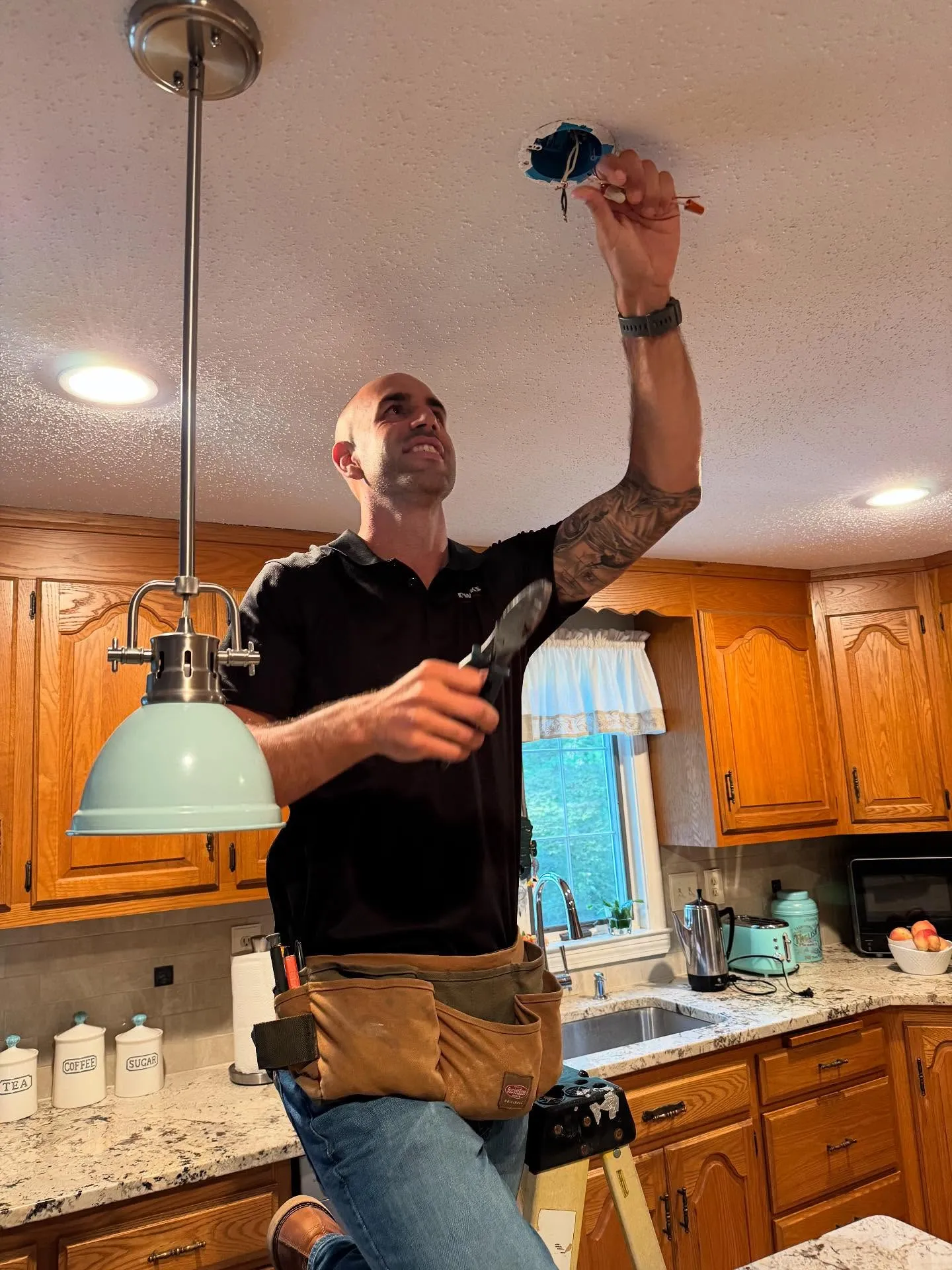
Real crews, real Connecticut houses, no stock photography.
Need help today?
Whether it's an emergency repair or you're planning your next home upgrade, our friendly team is ready to help.
Call 860-245-1986Book electrical service online
Tell us what’s going on and we’ll call to confirm your appointment window.